Short, practical introduction
The first step to making a home safe for children is a quick risk audit followed by solutions tailored to the actual rooms and usage scenes. Start by testing likely danger points (stairs, balconies, high furniture, pipes and electrical outlets) then implement priorities using mechanically mounted gates and fixtures, furniture anchors, and lockable storage boxes. The tips below are detailed with examples suited to Egypt and the Middle East and are globally applicable.
Stair safety: what really works
- Always use hardware-mounted gates at the top of stairs; pressure-mounted gates can detach and should never be used at the top. A gate height of 75–90 cm (30–36 in) is appropriate for infants and young walkers.
- When choosing mounting locations, attach the gate directly to the wall structure or to a reinforced wood frame — do not mount on a weak banister or on an unreinforced gypsum board wall.
- In stone or concrete buildings common in Egypt, use masonry-appropriate screws and anchors, and hire a professional if you are unsure about the wall material.
- Watch for any gap between the gate and the floor; avoid an opening that could allow a child’s foot to slip through.
Balconies and windows: fixed barriers and local building considerations
- For balconies in Egyptian apartments and residential blocks, install locks on balcony doors with the key or release positioned high out of children’s reach.
- Mechanically mounted window guards that are certified and professionally installed prevent falls. Prefer guards that can be removed quickly from the inside with a tool for adult use only (emergency access), and do not rely on ordinary screens as a safety measure.
- Inspect railing height and opening size; if gaps allow a child’s head through or create footholds for climbing, add a safety mesh or a low solid panel.
Securing furniture and TVs: steps against toppling heavy pieces
- Anchor tall cabinets, wardrobes and shelving units to the wall using furniture-specific anchors. Place anchors at the top of the item and at balance points (behind the top panel and along the side columns).
- For televisions: use an appropriate wall mount with screws fixed to studs or to concrete anchors as required. Do not place a TV on an unanchored low table.
- In Egypt, concrete walls are common; use concrete anchors or hire a carpenter/technician for secure installation. Refer to recommended practices (for example: Consumer Reports) to reduce tip-over risk.
Outlets and cables: practical protections
- Install tamper-resistant outlets or use removable outlet covers designed for adults. Ensure outlet covers are chew-resistant.
- Route cables behind furniture or inside cable channels; use fixed cable clips to secure wires to the wall and keep charging adapters away from table edges.
- For smart lamps or heaters, place them out of children’s reach and teach older children safe electricity rules.
Kitchen and bathroom: protect from burns, slips and poisoning
- Kitchen: use oven knob covers or oven locks, keep pans and handles turned inward on the hob. Install thermostatic mixing valves or faucet temperature limiters to reduce scald risk at taps.
- Bathroom: set the water heater to 48°C (approximately 120°F) or lower to reduce scald risk — check the manufacturer’s recommendations and comply with any local regulations.
- Use non-slip rubber mats in baths and showers, and lock medicine and cleaning-product cabinets with child-resistant locks.
Cabinet locks, edge protection and small toys
- Fit child locks to cabinets and drawers that contain hazardous items (cleaning products, medicines, sharp tools).
- For table and desk corners, use corner protectors and non-slip pads for glass surfaces.
- Monitor small, detachable toy parts: items that pass through a 1.25-inch diameter cylinder pose a choking hazard for infants.
Layering protection by developmental stage: from infancy to school age
- 0–6 months: prevent access to elevated surfaces, secure the crib, cover outlets, remove small toys.
- 6–12 months: install gates at stairs, anchor furniture, lock kitchen and bathroom cabinets.
- 1–2 years: verify all installations, teach “do not touch,” supervise play near windows and balconies.
- 3–5 years: add simple emergency-exit drills, basic safety lessons, reduce climbable objects near hazards.
- 6–12 years: reassess devices and permissions — allow reasonable independence while continuing restrictions on dangerous equipment and cleaning agents.
Decision table / Checklist
Use the table below as a quick daily/weekly checklist before hosting children or receiving guests with young children:
| area/hazard | immediate DIY action | needs a professional | verification indicators |
|---|---|---|---|
| top of stairs | ensure a hardware-mounted gate | installing a gate in concrete walls — electrician/carpenter | no lateral movement; lock functions |
| bottom of stairs | pressure-mounted gate / secured | anchor installation into wall if heavy loads expected | three-point tension test |
| balcony | lock balcony door with elevated key | install certified window guards | not openable by children |
| heavy furniture | adhesive anchors or straps | anchoring into concrete/gypsum structure — carpenter/contractor | no movement when pushed |
| television | mount with studs-mounted bracket | in-wall cable routing — electrician | no pull displacement |
| outlets | outlet covers or caps | install tamper-resistant outlets — electrician | no access to prongs/sockets |
| kitchen | cabinet locks / oven knob covers | install hot-water limiters — plumber | safe water temperature |
| bathroom | non-slip mat | thermostatic mixing valve installation — plumber | no slipping during use |
Which installations should be done by a professional?
We recommend calling a licensed installer or contractor for the following: - Installing gates at the top of staircases or on metal/concrete stair ends where drilling concrete requires special tools. - Installing certified window guards or making window modifications (which affect integrity and ventilation). - Mounting TV brackets on concrete walls or running concealed electrical wiring inside walls. - Installing thermostatic mixing valves or rerouting pipes in kitchens and bathrooms. - Deep carpentry or mechanical work that affects structural safety should be completed by a licensed technician.
How to choose appropriate products: technical criteria and certifications
- Look for products marked tamper‑resistant or carrying local/international safety certifications, and check load and weight limits and installation instructions.
- When comparing child gates, prefer models that mount with screws for top-of-stair installations; pressure-mounted gates are acceptable only for low-risk interior doorways.
- Read consumer reviews from reliable sources and confirm that clear installation guides are provided. Consumer Reports and the U.S. CPSC provide advice on common weak points.
Balance safety with daily comfort: design that fits family life
- Create clear walkways free of trip hazards: non-slip rugs, tidy cable covers, and furniture arranged to route circulation away from windows and balconies.
- In interior design, hide cleaning tools and medicines in locked, elevated cabinets, and allocate safe play zones on each floor where possible.
Frequently Asked Questions
Q: Can I use a pressure-mounted gate at the top of the stairs?
A: Pressure-mounted gates are not recommended at the top of stairs. Use a gate mechanically mounted to the wall for fall protection (hire a professional if necessary).
Q: How do I know if furniture is securely anchored?
A: Push the top of the furniture with your hand; it should not move. Use metal anchors or straps fixed to studs or concrete, and check mounting screws regularly.
Q: What is the difference between a regular outlet cover and a tamper-resistant outlet?
A: Tamper-resistant outlets have an internal shutter that prevents insertion of objects unless a plug is inserted fully, making them safer than simple plastic caps.
Q: When should I call a plumber or electrician?
A: Call a professional when changing hidden water or electrical connections or when installing fixed devices that require structural work (for example: thermostatic mixing valves or in-wall TV wiring).
Q: How should I handle small balconies typical of Egyptian buildings?
A: Fit a high door lock for the balcony door, install certified window guards, and reduce climbable furniture near the railing. Hire a technician to fit guards when needed.
Q: Are there recommended review intervals for safety solutions?
A: Yes — review your protections every six months or whenever your child’s abilities change (starting to walk, climbing), and adjust barriers to age and skill level.
Q: Can I install most locks and accessories myself?
A: You can install most simple locks and covers yourself, but any work that drills into concrete or modifies electrical/plumbing systems requires a professional.
Homey inspection and installation CTA
If you want a full safety inspection or a plan for fixed solutions appropriate to Egyptian and Middle Eastern buildings and climates, book an interior-planning consultation or a Homey Safety Hardware Installation. Homey can provide an installation plan, recommended product lists, and schedule professional execution.
Amazon
To review product categories and styles available to consumers, browse the Homey product curation on Amazon: Amazon storefront — always check product specs, seller history and installation instructions before purchase.
Suggested media (photos and video)
- Image 1: concept diagram showing wall anchors for a tall wardrobe with force lines and anchor points — suitable for wood and concrete scenarios.
- Image 2: professionally shot installation of a hardware-mounted gate at the top of a stair in a typical Egyptian home (showing mounting and mechanism).
- Image 3: high-resolution comparison between a certified window guard and an ordinary window screen, highlighting openings, edges and anchor points.
- Image 4: practical Egyptian kitchen scene — showing cabinet locks, tidy appliance cables and a faucet temperature limiter.
- Image 5: printable infographic linking child-development stages to safety requirements.
- Video placement: Homey/YouTube video carousel demonstrating gate and TV-mount installation steps to clarify the process before booking.
Implementation notes and safety reminders
- Check local regulations regarding balcony and window modifications in residential buildings, and consult the building manager or homeowners association if applicable.
- Do not rely on window screens or curtains as safety measures. Always verify load ratings and standards compliance.
- Hire a licensed engineer or technician for structural, electrical or plumbing work when needed.
References
- U.S. Consumer Product Safety Commission (CPSC) guide to childproofing your home: https://www.cpsc.gov/safety-education/safety-guides/kids-and-babies/Childproofing-Your-Home
- SafeKids.org safety tips for homes: https://www.safekids.org/safetytips/field_venues/home
- Consumer Reports on furniture anchors and tip-over risk: https://www.consumerreports.org/home-garden/furniture/furniture-anchors-not-an-easy-fix-as-child-tip-over-deaths-persist-a4537497732/
Maintenance and everyday routines for a child-safe home
Long-term safety is a combination of well chosen fittings and simple daily habits. Arrange play spaces so caregivers have clear sightlines from common seating areas, keep frequently used hazardous items (hot drinks, keys, medicines) out of the child’s reach during routine tasks, and adopt simple rules that all adults in the home follow consistently. Small changes in how you move through the house — carrying hot liquids away from edges, always closing appliance doors, and putting away small parts immediately after activities — will reduce many common incidents without altering the interior look.
Regular checks keep devices effective. Do a short visual walkthrough each week to spot loose screws, trailing cords, displaced rugs or toys on stairs. Every few months check fastenings on anchors, gate mounts and window hardware for wear or movement and tighten or replace parts as needed. Keep a basic tool kit and a dated log of installations and inspections so you can see when items were last serviced; this makes it easier to schedule professional attention when a fixing or guard shows signs of wear or after any impact.
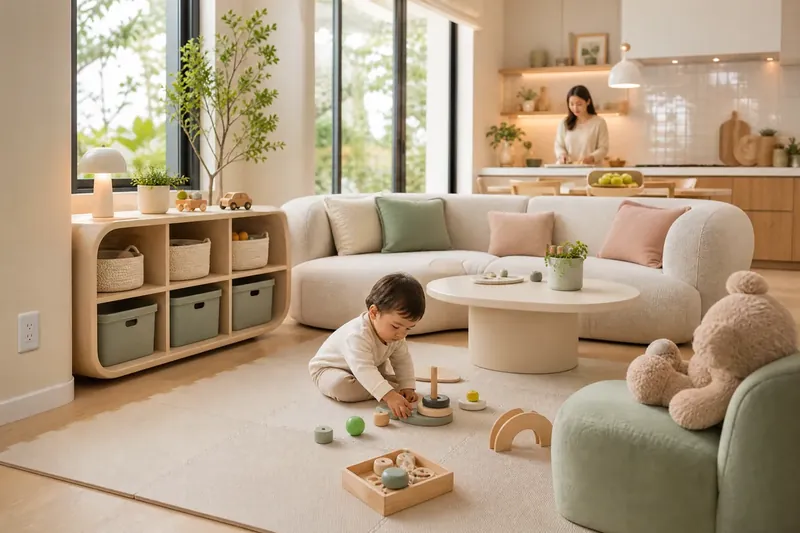
- Create a supervised play zone close to adult seating so children can play safely while you carry out tasks.
- Use gripper pads or double-sided tape under rugs and stair runners to prevent slips and trips.
- Choose cordless window coverings or secure cords well out of reach to eliminate strangulation hazards.
- Keep a small toolkit and a visible checklist: weekly visual check, monthly functional test, and a note when any part is tightened or replaced.
- Install low-level night lighting in hallways and at stair approaches to improve visibility during night-time movement.
Frequently Asked Questions
How often should I inspect safety fittings and anchors?
Do a quick visual inspection weekly and operate each device to confirm it works at least once a month. Tighten screws and check fixings every three to six months, and arrange a professional review if an anchor feels loose after a knock or if you change the furniture layout.
Can child-safety solutions be attractive and fit my decor?
Yes. Choose finishes and materials that match your interior, conceal safety hardware behind furniture or within trim where possible, and pick products with rounded profiles and neutral colours. Many protective items are available in understated styles so safety becomes part of the room’s design rather than an add-on.
If I need to prioritise upgrades, where should I start?
Focus first on places with the greatest injury risk: stair and balcony openings, tall or heavy furniture that could tip, and storage for poisons and medicines. While saving for permanent mechanical fixes, use interim measures such as outlet covers, non-slip mats and supervised play areas to reduce immediate risks.
For a coordinated solution tailored to your space, explore related Homey Decor services and products, and browse Homey’s selected home products on Amazon. Homey Decor services | Homey on Amazon