Practical Introduction
Choosing the frame material for windows and doors (aluminum or uPVC) directly affects home comfort, energy consumption, noise levels, and the building's appearance. This guide provides a practical examination and applicable comparisons for residential projects in Egypt and the Middle East, with globally useful information. At the end you'll find a decision checklist, installation tips, and follow-up options with Homey services.
Fundamental Structural and Visual Differences
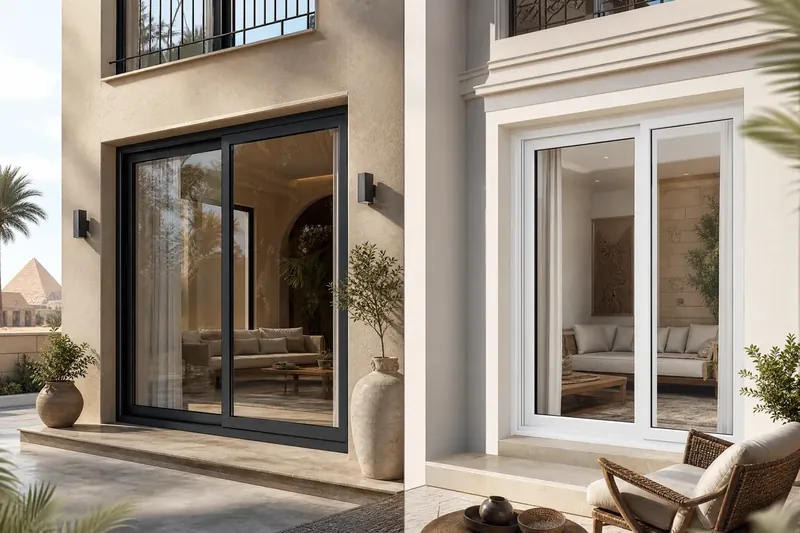
- Aluminum: Slim, strong profiles that allow large glazed façades; suited to modern lines and minimalist architecture. Requires a thermal break to reduce thermal conductivity.
- uPVC: A naturally insulating plastic material, often manufactured in multi‑chamber profiles to boost thermal and acoustic performance. Offers a warmer look and suits traditional windows and residential buildings.
Thermal Performance Across Harsh Climates
- In hot climates (like Egypt): Thermal performance depends on glazing quality, solar shading, and ventilation; multi‑chamber uPVC provides good insulation without a thermal break, while aluminum requires an effective thermal break to reach similar performance.
- In cold or variable climates: Both materials' performance depends heavily on glazing type (double/triple) and Low‑E coating. We recommend requesting the U‑value and an energy assessment before deciding.
Acoustic Insulation: Which Is Better for Noisy Cities?
- Acoustic performance depends not only on the frame but also on cavity thickness, glazing type, and sealing details. Multi‑chamber uPVC typically offers a tight seal that reduces noise ingress, while well‑designed aluminum with a thermal break and rubber gaskets can match or approach uPVC performance.
- For high‑noise locations (main roads, stations): focus on insulated glazing (different thicknesses or laminated glass) rather than relying solely on the frame type.
Security, Durability and Maintenance: Practical Tradeoffs
- Security: Both materials can achieve high security levels with multi‑point locks, steel reinforcement within the frame, and high‑quality hardware. Aluminum gives greater rigidity with slimmer frames but requires proper design to integrate locks.
- Durability: Aluminum resists deformation and, when properly coated, resists corrosion and lasts many years; uPVC does not rust but can be affected by extreme heat or prolonged UV exposure if UV stabilizers are not added.
- Maintenance: uPVC requires little more than periodic cleaning. Aluminum is also low maintenance but may need coating touch‑ups or gasket replacement over time.
Comparison: Thermal‑Break Aluminum vs Multi‑Chamber uPVC
| Criterion | Aluminum (with thermal break) | uPVC (multi‑chamber) |
|---|---|---|
| Thermal insulation (typical U‑value) | Good to excellent when properly applied | Good to excellent; advantage in some models |
| Acoustic insulation | Good with suitable glazing and gaskets | Very good, especially with a tight seal |
| Security | High with appropriate design and internal reinforcement | High with internal steel reinforcement |
| Durability | Excellent against load and brittleness | Very good; may deform under extreme heat |
| Maintenance | Low; may need gasket or coating maintenance | Low; regular cleaning is sufficient |
| Architectural appearance | Ideal for modern glass façades | Conveys a warmer look; suits traditional façades |
(The above table is a general guide; actual values vary by supplier and specification.)
How Glazing (Double/Triple and Low‑E) Interacts with Frames
- Double vs Triple Glazing: Triple glazing offers better thermal and acoustic performance but is heavier and requires stronger frames and appropriate assembly design. In Egypt’s hot climate, high‑performance double glazing with Low‑E and solar shading can be a balanced choice.
- Low‑E Coating: Reduces infrared radiation and improves thermal performance without significantly reducing natural light; effective with either aluminum or uPVC.
- Cavity spacer and gas fill (argon): Reduce heat transfer between panes; beneficial with both frame types.
Cost and Return on Investment (ROI) for Residential Projects
- Initial cost: uPVC is often cheaper in standard sections, while aluminum costs more due to materials, coatings and thermal breaks. However, architectural decisions (large house doors, glass façades) may make aluminum the only practical option.
- Long‑term return: Depends on achieved energy savings (reduced AC/heating consumption), product lifespan and maintenance, and added property value. We recommend calculating ROI through an energy audit (Homey Energy Audit) to estimate annual savings accurately.
How to Choose the Right Material by Climate, Style and Technical Criteria
- Hot/dry climates (Egypt/inner Middle East): Multi‑chamber uPVC with double Low‑E glass or aluminum with thermal break plus solar shading are both valid solutions. Choice depends on façade appearance and required glazed areas.
- Coastal/humid areas: Properly coated or anodized aluminum is a strong option when salt exposure is expected; uPVC can also perform well but check for UV stabilizers and additives.
- Modern buildings with large glazed façades: Aluminum (with designed thermal break and internal reinforcements) is generally preferable.
- Traditional residential buildings or tight budgets: Multi‑chamber uPVC is comfortable and effective.
Quick Inspection Checklist (before final decision)
- [ ] Assess thermal insulation requirements (request U‑value from supplier).
- [ ] Define required acoustic insulation level and request Rw or STC certificates for the assemblies.
- [ ] Confirm thermal break for aluminum or multi‑chamber design for uPVC.
- [ ] Inquire about security reinforcements (steel bars, multi‑point locks).
- [ ] Review glazing specifications: double/triple, gas fill, Low‑E coating.
- [ ] Request color samples and cross‑section samples to inspect gaskets and hardware.
- [ ] Get an energy assessment and ROI measurement from a specialist (e.g., Homey Energy Audit).
- [ ] Review warranty and installation service terms from the supplier.
Fast Decision Table: When to Choose Which Material
| Project condition | Best option | Notes |
|---|---|---|
| Large glazed façades, contemporary design | Aluminum with thermal break | Requires structural support and glass weight design |
| Tight budget with focus on thermal insulation | Multi‑chamber uPVC | Verify UV resistance and product quality |
| Coastal projects | Corrosion‑resistant aluminum or uPVC with stabilizers | Check salt exposure and protective coatings |
| High acoustic insulation requirement | Either with laminated/different‑thickness glazing | Focus on glazing and airtight seals |
Practical Steps for Procurement and Installation
- Request a detailed site survey for accurate measurements and reveal depths.
- Ask for engineering cross‑sections and specifications of sealing gaskets.
- Obtain detailed quotes including installation, warranty and certificates.
- Integrate energy and security services (Homey Energy Audit and Homey Smart Home Security Integration) to maximize performance.
- Contract a qualified, licensed installer and check local permits for structural work or openings.
Practical Maintenance Tips for Each Material
- uPVC: Clean with mild soap and water every 6–12 months, check gaskets regularly, avoid abrasive cleaners.
- Aluminum: Periodic cleaning, inspect coatings and gaskets, treat any surface corrosion promptly and service hinges.
- Both: Inspect locks and hardware annually and lubricate hinges as needed.
Amazon
We recommend checking the Homey Bazaar store for related categories such as smart window sensors, window security locks, draft seal tapes, glass and window maintenance kits, and thermal curtains. Verify fit and specifications before purchase: Amazon storefront
Homey Integration and Follow‑Up Options
- Recommended connected services: Homey Window & Door Installation Services, Homey Custom Architectural Joinery Consultation, Homey Energy Audit & Thermal Efficiency Assessment, Homey Smart Home Security Integration.
- Book an on‑site assessment if your window is part of a redesign or if you need an accurate ROI calculation.
Frequently Asked Questions
- Which is better for thermal insulation in Cairo’s hot climate? - If the goal is thermal insulation without large glazed façades, multi‑chamber uPVC with double Low‑E glazing provides a cost‑effective solution; for large glazed façades, thermal‑break aluminum with suitable glazing may be more appropriate.
- Does aluminum corrode in coastal areas? - Aluminum does not rust like iron but can experience surface corrosion; special coatings and corrosion‑resistant treatments are important in salty environments.
- Can uPVC windows be upgraded for sound insulation? - Yes, by installing acoustic glazing (laminated glass) or wider air cavities, and improving gaskets and seals.
- Is triple glazing necessary in Egypt? - Not always; many buildings achieve very good performance with high‑quality double glazing, Low‑E coating and appropriate solar shading.
- What basic maintenance does each type need? - uPVC: regular cleaning and gasket inspection. Aluminum: check coatings and gaskets, annual cleaning and hinge lubrication.
- How do I calculate ROI from replacing windows? - Estimate annual savings in cooling/heating costs after installing new windows, compare with material and installation costs, and request a professional energy assessment (Homey Energy Audit) for an accurate calculation.
Conclusion and Call to Consultation
Choosing the right frame depends on balancing thermal performance, acoustic insulation, appearance and budget. Before deciding, follow these steps: site survey, compare specifications (U‑value, acoustic certificates), and run a cost‑benefit analysis via an energy audit. For a field analysis and a tailored recommendation for your residential or development project, arrange a consultation with Homey experts through our installation and audit services.
References
- (https://store.windoorfull.com/blogs/news/the-great-window-debate-aluminium-or-upvc-whats-best-for-your-home)
- (https://www.archiproducts.com/en/news/upvc-windows-vs-aluminium-windows_106046)
- (https://brogawindows.com/blog/comparison-of-upvc-and-aluminum)
On-site checks, supplier questions and final decision tips
Before signing a contract, use the installation stage as a final technical filter. Ask manufacturers to show measured performance figures for heat transfer and sound reduction, and request photos or visits to completed projects with similar climate exposure. Make sure the installer will take precise in‑place measurements rather than relying on shop drawings alone, and confirm how they will accommodate thermal movement, drainage, and airtight sealing at the frame perimeter. For large openings, ask to see how the chosen profile manages sash weight and alignment so you avoid sagging or binding later on.
Think about upkeep and future service when you choose a product. Clarify which parts are considered consumables (gaskets, brush seals, hardware), how easily they can be replaced, and whether identical replacement components will remain available from the supplier. Agree on a short walkthrough acceptance with the installer: operate every sash and door, check locking function and weather seals, and inspect visible fixings and the coating for touch‑up needs. If you prefer, coordinate these checks through Homey Decor’s follow‑up options so the handover is documented and any snags are tracked.
Finally, match practical expectations to lifestyle and site-specific conditions. For seaside or highly polluted locations, prioritise corrosion‑resistant fasteners and factory-applied protective finishes; in dense traffic corridors, focus on glazing assemblies and seals that reduce noise rather than relying on the frame alone. For retrofit projects, ask about frame adaptors and reveal trims so the new units fit existing walls without extensive rebuilding; for new construction, consider full-frame integration with insulation and external shading for the best long‑term comfort.
- Request documented thermal and acoustic test numbers and examples of completed installations in similar climates before purchase.
- Ask the installer how they will allow for material expansion, drainage paths, and airtight sealing at the head, sill and jambs.
- Require a pre-handover checklist: operate every opening, verify locking and hardware, inspect seals and paint/coating, and photograph any defects for rectification.
- Confirm availability of spare gaskets, hardware and color-matched touch‑up materials, and agree a simple replacement process for wear items.
- Specify coastal or polluted-site protections when relevant (stainless or coated fixings, and factory-applied surface protection) and ensure these are written into the order.
Frequently Asked Questions
What basic checks can I do immediately after installation?
Open and close each window and door several times to confirm smooth operation and correct alignment. Look for uniform gaps around the sash, intact and continuous seals, secure fasteners, and clean drainage channels at the sill. Test locks and bolts, and note any rubbing, rattles, or visible coating damage so the installer can correct them during the handover.
How often should seals and hardware be inspected and serviced?
Visually inspect seals, gaskets and drainage slots at least once a year and after extreme weather. Clean dirt and salt deposits as needed to prevent abrasion; lubricate moving parts lightly if they begin to feel stiff. Plan to replace worn or compressed seals when they no longer close tightly rather than waiting for failure.
Is it possible to improve performance later, for example by replacing glass or adding shading?
Yes. Upgrading the glazing composition or adding external shading are common ways to improve thermal comfort and noise control without changing frames. Full frame replacement is more involved, so discuss future upgrade paths with your supplier now and keep records of profile dimensions and hardware types to simplify later work.
For a coordinated solution tailored to your space, explore related Homey Decor services and products, and browse Homey’s selected home products on Amazon. Homey Decor services | Homey on Amazon