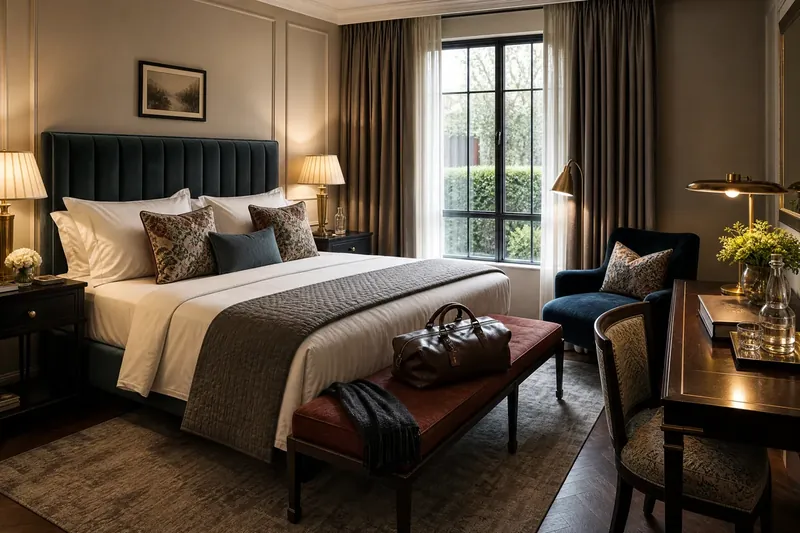
Brief practical introduction
Designing a luxury guest room for a boutique hotel must balance restful sleep, efficient daily operations, material durability, and smart technologies that enhance the guest experience. This practical guide offers actionable strategies suited to Egypt and the wider Middle East, with globally adaptable approaches and a planning checklist to use before procurement and implementation.
Core design philosophy
Start with one objective: a room that ensures quiet sleep and low-cost daily operation. Focus on three balanced pillars: effective acoustic and blackout control, smart storage planning that respects housekeeping workflow, and multi-layered architectural lighting managed from a single control point.
Acoustic improvements and blackout solutions to improve sleep quality
- Acoustic sealing: use insulated walls and sealed joints around frames (rubber or silicone). Consider adding fabric-faced or porous acoustic panels at the headboard and on walls facing noise sources.
- Commercial-grade products: acoustic panels with a clear absorption rating (NRC), thickness 50–100 mm for targeted treatment in reflection zones.
- Blackout solutions: multi-layer blackout curtains (heavy face fabric + reflective lining) with an electric track or centralized control system to operate all window treatments at once. Practical target: 100% window coverage to avoid edge light leakage.
- Regional tip (Egypt/Middle East): for buildings overlooking busy streets in Cairo or nightlife areas in Dubai, increase external wall insulation ratios and use double glazing (12–16 mm cavity) where the structure permits.
Space planning and luggage storage to streamline daily housekeeping
- Tidy arrival zone: provide a commercial luggage rack and a pocket for hangers and a secure key lock. The luggage rack should be adjustable to support 20–40 kg items.
- Integrated storage solutions: a pull-out drawer under the bed or a wheeled separable unit for suitcase storage; raised platforms that allow easy vacuuming by robotic cleaners.
- Housekeeping circulation: keep unobstructed service paths 90–120 cm wide to move housekeeping trolleys easily.
- Regional examples: in space-constrained Cairo hotels use recessed joinery to reduce handling space needs; in coastal resorts design moisture-resistant wardrobes with anti-mold coatings.
Multi-layered architectural lighting to enhance guest comfort
- Level 1 — comfortable general lighting: LEDs at 2700–3000 K for a warm ambiance; controls that reset lighting scenes at check-in/check-out.
- Level 2 — task and zonal lighting: directional bedside reading lamps, motion-sensor wardrobe lighting, and makeup mirror lighting matching daylight 3000–4000 K.
- Level 3 — mood lighting: concealed LED strips behind the headboard or at furniture plinths with dimming and color-temperature control.
- Controls: integrate DALI, 0–10V, or smart protocols with a single control hub allowing preset scenes such as "Sleep", "Work", and "Service".
Automation and IoT integration to elevate the guest experience
- Central control system: a simple wall touchscreen or mobile app controlling lights, curtains, temperature, and "Do Not Disturb" state.
- Energy monitoring and service management: occupancy sensors that reduce energy use 5–15 minutes after a guest leaves, and notify maintenance on component failure.
- Guest service integration: support in-room voice control with privacy boundaries, and fixed charging ports (USB-C and USB-A) at bedside.
- Network security: ensure separate meshes for guest networks and hotel systems, enforce regular security updates, and manage device keys and certificates.
Durable, commercial-grade materials for high guest turnover
- Scratch-resistant surfacing: HPL (High-Pressure Laminate) with scratch and moisture resistance suitable for furniture and facings. Compare it against wood veneer in a practical side-by-side test (see comparison image reference).
- Fabrics: high Martindale-rated upholstery with stain-resistant finishes that withstand frequent sanitizing.
- Hinges and locks: commercial-rated door hardware and hinges designed for high cycle counts—choose heavy-duty iron or hospitality-grade variants.
- Floors: use non-slip ceramic tiles in wet areas (10–20% slip rating) and select carpet tones that acoustically match the bedroom to reduce impact noise.
- Regulatory note: confirm local fire and safety regulations when selecting fire-resistant materials and consult a qualified engineer for final electrical and plumbing installations.
Designing the transition from bedroom to en-suite bathroom
- Functional privacy screen: use a low wooden divider or a custom screen rather than a fully exposed glass door to preserve privacy from sound and odor.
- Continuous floor levels: ensure the threshold between bedroom and bathroom meets accessibility requirements and prevents water pooling.
- Ventilation and lighting: include mechanical ventilation with a timed fan to reduce humidity, and adjustable mirror lighting for guest routines.
- Sustainable fittings: water-saving taps and high-quality valves reduce maintenance.
Housekeeping-friendly design and maintenance
- Easy-clean furniture: raised bases and bed frames with clearance that allow robotic vacuum access.
- Stain-resistant basins and mirrors: surfaces that do not require frequent polishing; line cabinets with wipeable materials.
- Maintenance system: digital cards tied into the hotel management system that trigger alerts when items need repair or replacement.
Quick decision table: pre-approval checklist before design sign-off
| Area | Recommended materials | Target sound absorption (NRC) | Durability / maintenance rating | Implementation maintenance notes |
|---|---|---|---|---|
| Sleeping area (headwall) | Fabric-faced acoustic panels or HPL | 0.6–0.8 | High, weekly surface cleaning | Fix critical points with sealed joints |
| Carpet / flooring | Commercial carpet / nylon pile + resistant tiles | 0.3–0.6 | Medium, daily vacuuming | Choose carpet with replaceable underlay |
| Curtains & shades | Double-layer blackout curtains | — | High, periodic surface cleaning | Central electric system; test failure modes |
| Doors & handles | Commercial metal / stainless handles | — | Very high, scheduled servicing | Use hotel-grade hinges |
| Bathroom | Waterproof ceramic tile | — | High, daily cleaning | Verify drainage and mechanical ventilation |
Material comparison: quick implementation snapshot
- HPL vs. wood veneer: HPL provides better scratch and moisture resistance and easier maintenance in high-turnover environments; wood veneer offers visual luxury but requires more upkeep. (See comparison image in the visual plan.)
Safety, codes and approvals
This document does not replace structural, electrical or plumbing consultancy. Check local fire protection, accessibility and building regulations, and work with qualified engineers for final installations.
Frequently Asked Questions
Question: How do I evaluate the effectiveness of blackout curtain solutions? Answer: Aim for 100% curtain coverage of the window, test at dawn and dusk, and check for edge light leaks. Use thermal linings if the building is in a hot climate.
Question: What is the best way to reduce noise through party walls? Answer: Install an insulating layer within the wall (rock wool or insulated panels with an air gap) and improve seals around penetrations and openings.
Question: Are smart control systems privacy-safe? Answer: They can be secure if guest networks are segregated from building control networks, local gateways replace cloud storage when necessary, and systems are kept up to date.
Question: Which materials are best for low-maintenance coastal properties? Answer: Choose HPL with salt-resistant backing, and powder-coated or stainless steel fixtures and hardware.
Question: How should I design space to speed up housekeeping turnaround? Answer: Plan 90–120 cm service aisles, use elevated furniture for easy cleaning, and integrate secure service-oriented storage for quick access.
Question: What are the target metrics for sleep quality? Answer: Targets include reducing background noise to under 35 dB inside the room, plus dimmable lighting and multiple preset scenes that support sleep hygiene.
Question: How do I balance luxury and durability in material choices? Answer: Use luxury, replaceable finishes (for example: removable headboard panels) combined with commercial-grade materials in high-contact areas.
recommended storefront
We recommend visiting the Homey store on Amazon to review categories and possible models as a reference for product lists (for review only — verify technical suitability and stock availability before purchase): Amazon storefront
Categories to review carefully: blackout curtains, acoustic panels, commercial luggage racks, smart control panels, hospitality LED table lamps, and heavy-duty commercial door hardware. Always check commercial ratings and warranty requirements before adding items to your project.
Advisory invitation from Homey
If you plan to refurbish boutique hotel rooms or build a new project, contact Homey's interior consulting team for an acoustic survey, schematic layout, and a detailed materials plan. The service includes a site survey, a tailored recommendations report, and operations-optimized materials lists.
References
- https://www.mingsungroup.com/blog/hotel-room-interior-design-guide.html
- https://www.mews.com/en/blog/hotel-interior-design
- https://ekkoacoustics.com/acoustics-in-the-hospitality-industry/
Practical operational and material choices for Egypt and the region
Select finishes and soft furnishings that tolerate heat, dust and frequent cleaning while still reading as upscale. In coastal or humid locations prefer hard surface floors with easily removed and launderable rugs rather than wall-to-wall textile flooring; where carpets are required, use low‑pile, stain‑resistant constructions that can be steam‑cleaned. Upholstery and drapery should have removable covers or be specified in fabrics designed to resist fading and soiling; keeping a consistent stock of replacement slipcovers simplifies routine maintenance and preserves the original look without full refurbishing.
Design rooms so engineering and housekeeping tasks are fast and predictable. Provide discrete service access to mechanical and electrical zones, standardize lamp and filter types across the hotel, and keep a small parts inventory of commonly replaced elements (switches, handset modules, curtain carriers). Combine modest decorative accents sourced from local makers with modular, commercial-grade bedroom units that can be swapped room-by-room to avoid long downtimes — this approach lets you celebrate regional character while keeping turnover and repair time low.
- Specify removable textile components (bed throws, cushion covers, slipcovers) to allow regular laundering without replacing the base furniture.
- Locate electrical outlets, USB points and reading lights so they are reachable from the bed and desk; standardize their placement to speed refurbishment and reduce guest complaints.
- Install accessible service panels for HVAC and control wiring in a maintenance corridor or closet to avoid intrusive room dismantling during repairs.
- Order spare modules (door handles, bedside controls, lamp bases) at fit-out time to ensure consistent replacements and reduce room downtime.
- Use washable wall finishes or protective panels in high-contact zones (behind the bed, near luggage areas) to minimize repaint cycles.
Frequently Asked Questions
How should fabrics be chosen for humid or coastal hotels?
Pick tightly woven, quick-drying textiles that resist mildew and fading. Ensure cushions and upholstery have removable covers and specify finishes that tolerate frequent laundering. Maintain a regular laundering schedule and consider mechanical dehumidification in rooms that suffer persistent moisture.
What is the fastest way to validate a new guestroom layout before rolling it out hotel‑wide?
Fit out a single prototype room and run it in normal operation for several weeks. Include housekeeping and engineering staff in the trial, track cleaning and repair times, and gather guest feedback. Use the findings to tweak joinery details, service access and consumable specifications before bulk procurement.
Can local decorative elements be used without increasing maintenance?
Yes — reserve handcrafted or delicate items for low-touch areas (corridors, guest arrival niches) and protect decorative textiles with clear, breathable coatings where necessary. Where artisanship is featured in rooms, make those pieces easily replaceable or reproducible and document materials and techniques so repairs remain straightforward.
For a coordinated solution tailored to your space, explore related Homey Decor services and products, and browse Homey’s selected home products on Amazon. Homey Decor services | Homey on Amazon