Introduction — concise and practical
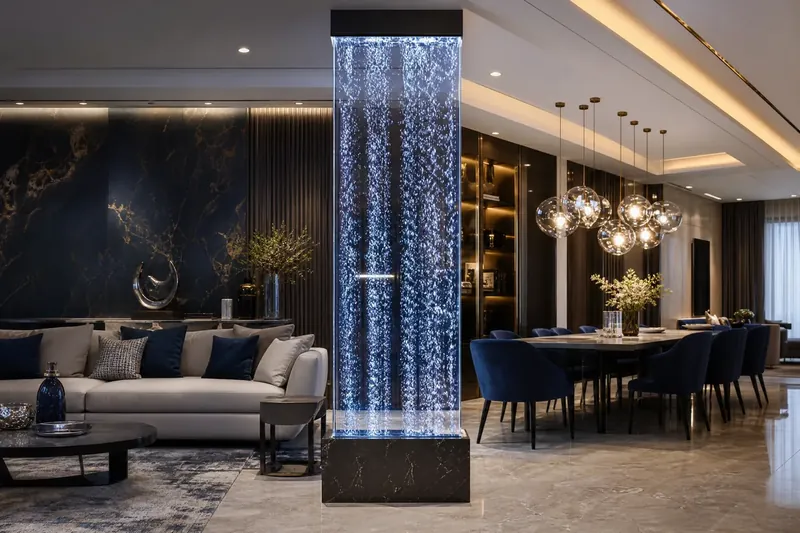
A water bubble panel is a transparent vertical bubble-water panel with calm illuminated bubbles rising gently from the bottom to the top. It is a strong design element that adds motion, sparkle and a sense of calm to luxury interiors. Before purchase or installation: decide the functional location (hotel, reception, private environment), calculate water loads and weight, and plan safe electrical circuits plus regular maintenance access. This guide provides practical, region-appropriate steps for Egypt and the Middle East with international best-practice tips.
What is a water bubble panel?
A water bubble panel is a vertical transparent panel (acrylic or treated safety glass) filled with distilled or treated water, where small illuminated bubbles rise gently from the base to the top. Motion is sustained by a submersible pump or a controlled air-injection system, and lighting is typically colour-capable LED to add visual depth. For more about the basic concept and commercial types, see manufacturer guides (https://www.midwest-tropical.com/water-bubble-wall/) (https://bluworldusa.com/bubble-walls-adding-beauty-to-your-space/).
How the upward transparent bubbles work
- A controlled bubble source is driven by an air distributor or a pump’s internal air-mixing geometry.
- Bubbles are generated when air is delivered through outlets at the panel base and rise through the water column.
- Lighting usually sits at the base or inside the panel body as LED strips or controllable LED modules.
These panels are designed to produce bubbles that rise from bottom to top — not a waterfall — with pump speed and air distribution adjusted to produce an even visual pattern.
Site selection and architectural integration: practical fundamentals
1) Sightlines and function: choose a location visible from multiple angles (hotel lobby, reception, entry lounge, or as a space divider in a salon). 2) Ambient lighting: avoid direct sunlight to reduce algae growth and glare on viewing angles. 3) Maintenance access: design a frontal access zone or a rear service access panel for pump checks and cleaning without full disassembly. 4) Ventilation and moisture control: for longevity, include HVAC considerations for long-session public spaces.
In Egypt and the Gulf: position panels away from direct western sun paths and place them within air-conditioned reception layouts to set lighting and maintenance schedules according to local climate.
Architectural options: built-in wall, freestanding unit or divider?
- Wall-mounted (built-in): sleek, zero floor footprint, requires accurate structural support and routing for pipework and service channels.
- Freestanding: flexible placement and re-configurable, but needs a stable base and floor fixings that occupy some area.
- Divider: suited to hospitality lounges; provides visual privacy with dramatic effect.
The decision depends on project budget, functional needs and maintenance access.
Structural load requirements — worked example
As a worked example: a panel sized 2.0 m (height) × 0.8 m (width) × 0.10 m (thickness) holds approximate water volume = 2.0 × 0.8 × 0.10 = 0.16 m3 ≈ 160 litres ≈ 160 kg for the water alone. Add the weight of the panel, frame and equipment (for example 30–60 kg) to reach an approximate total ~190–220 kg distributed across the fixing points.
Note: these figures are illustrative — consult a structural engineer to determine point loads and safe fixing details according to wall and material type.
Electrical considerations and water safety
- Use a residual current device (RCD/GFCI) protected circuit for equipment near water.
- Use moisture-resistant connectors, sockets and switches compliant with local regulations.
- Power LED lighting with low-voltage drivers (e.g., 12–24 V DC) with protected transformers.
- Separate lighting circuits from pump circuits to simplify maintenance and increase safety.
Consult a licensed electrician and test the installation after fit-out to ensure compliance with local codes and safety requirements.
Maintenance: water clarity and algae prevention
Recommended maintenance routine (detailed schedule follows):
- Use distilled or appropriately filtered water to reduce salts and deposits.
- Use algae-control products formulated for panel use (follow manufacturer instructions).
- Check the pump and clean inlet filters every 3 months or as usage requires.
- Clean the acrylic panel surfaces with soft tools and acrylic-safe cleaners to avoid scratches.
We recommend a regular maintenance contract with a specialist or including the system in a Homey Maintenance Service Plan to extend operational life.
Pumps, filters and chemicals: what to choose?
- A small adjustable-rate submersible pump sized to the panel and tuned to produce fine bubble streams.
- A mechanical filter to trap fine debris before air channels or pump intakes.
- Algaecides designed for acrylic systems and non-abrasive acrylic cleaning products.
Search categories such as Submersible Water Pumps, Acrylic Water Feature Cleaners, Distilled Water Refill Systems and Waterproof Silicone Sealants for model selection and compatibility checks.
Lighting options to create mood
- RGB or RGBW LED strips for static colour states.
- Addressable LEDs for animated colour waves synchronised with the bubbles.
- Control protocols: DMX, Art-Net, Zigbee, Wi‑Fi — choose according to the building’s automation backbone (for example Homey Smart Lighting Controller or Homey Smart Automation Hub to link scenes).
- Synchronisation with music or environmental effects via audio-light control tools for interactive lounges and night venues.
Work with a lighting designer to select luminance and colour temperature that avoid glare on faces and reflective surfaces.
Hospitality and commercial applications: elevating the brand
- Hotel lobbies: a large panel as a reception backdrop creates a calm, premium impression.
- Waiting areas and executive suites: as a divider to give private, luxurious ambience.
- Fine-dining restaurants and private lounges: use shifting colour palettes to support seasonal themes or events.
Custom panels with discreet logo inlays or a unique bubble pattern can become a photographic focal point for guests.
Practical examples from Egypt and the region
1) Cairo hotel reception corridors: use partial-height panels (2–2.5 m) behind service desks with monthly maintenance during peak seasons. 2) Gulf showrooms: specify controlled cooling and lighting to limit algae growth in hot climates. 3) Private villa in New Cairo: a divider panel between living and dining areas at 1.8 m height with a rear service access module.
Quick decision table: compare installation types
| Criterion | Wall-mounted (built-in) | Freestanding | Divider |
|---|---|---|---|
| Floor footprint | Zero | Slightly higher | Medium |
| Ease of relocation | Difficult | Good | Moderate |
| Structural requirements | High | Medium | Medium |
| Maintenance access | Moderate | High (with service hatch) | Moderate |
| Visual impact | Always strong | Movable | Provides privacy |
Practical maintenance checklist (monthly / quarterly model)
- Monthly:
- Check water level (top up with distilled water if required).
- Visual check for cloudiness or algae.
- Clean exterior acrylic with acrylic-safe products.
- Every 3 months:
- Clean pump filter and air inlet.
- Test pump speed and flow; inspect hoses and fittings.
- Check lighting and re-calibrate colour scenes.
- Every 12 months:
- Full inspection by an authorised technician (leaks, silicone joints, seal condition).
- Replace pump if there is persistent vibration or unrecoverable performance loss.
Amazon
To review comparable items in categories such as Submersible Water Pumps, RGB LED Strip Lights or Acrylic Water Feature Cleaners, Homey recommendation: check our Amazon storefront to compare specifications and reviews before purchase (browse items and verify specs and reviews): Amazon storefront
Note: we do not assert availability of specific items in the storefront; use it as a reference for vetting choices.
Integration with Homey solutions and after-sales services
- Scene and lighting design: Homey Smart Lighting Controller integrates with advanced LED systems to create daily scenes and seasonal rituals.
- Detailed planning: book a Homey Interior Design Consultation to produce an integrated layout that considers maintenance routes and safety.
- Automation and maintenance: Homey Smart Automation Hub can link lighting and pump systems with scheduled maintenance reminders, while the Homey Maintenance Service Plan provides inspection schedules tailored to usage.
Our team can visit the site to evaluate the space and provide a measurable proposal and execution plan.
Frequently Asked Questions
- What exactly is a water bubble panel and how does it differ from an indoor fountain?
A water bubble panel is a vertical transparent panel containing illuminated bubbles that rise gently from bottom to top; it differs from a fountain because the water does not flow out of the panel or create falling water — it is a visually enclosed water volume.
- Can I install a bubble panel inside a residential bedroom?
Yes — but account for pump noise, maintenance access and electrical placement. We recommend low-noise pumps and a planned service route.
- How often should the water be changed or cleaned?
Perform a monthly visual check, top up distilled water as needed, and service the pump and filters every 3 months. Full water changes depend on water quality and environment (hot/humid conditions increase maintenance frequency).
- Does strong lighting increase algae growth?
Extended exposure to strong natural light can raise algae risk. Use distilled water, approved algaecides, and planned lighting schedules to avoid direct illumination that promotes growth.
- What is the risk of leakage and what should I do if it occurs?
Any water system carries leakage risk. Design with safety redundancies (silicone seals, shut-off valves, containment bases) and schedule periodic technical inspections. If a leak occurs: cut power, stop water supply and contact a qualified technician.
- Can lighting be synchronised with club music in a nighttime venue?
Yes — by using addressable LEDs or DMX fixtures connected to an audio-light controller. Ensure system compatibility with venue audio and safety systems.
Suggested images and video assets
Suggested original production images (real project photography): 1) Hero render: high-resolution render of a luxury hotel lobby with a floor-to-ceiling bubble-water panel (2.5–3 m) behind reception, warm soft lighting. 2) Sectional diagram: detailed drawing showing wall-mounted vs freestanding installations (fixing points, wiring and pipe routes), for architect deliverables. 3) Service access photo: rear service hatch open showing pump, filters and electrics labelled with maintenance steps. 4) Application shot: hospitality lounge demonstrating colour-matched lighting during an evening event with guests interacting near the panel.
YouTube/Homey carousel suggestions: - Use a video carousel on the Homey project page or official channel to show installation clips, engineer interviews and colour-scene demonstrations. (Use existing Homey materials when available.)
Conclusion and call to contact Homey
Water bubble panels add a sensory layer and a refined hospitality experience when specified and maintained correctly. If you are planning to integrate a bubble panel into a luxury hotel or residential project, book a site assessment with Homey Interior Design Consultation to review structural loads, electrical requirements and a detailed maintenance plan.
To schedule a site visit or request a technical proposal: contact Homey to arrange a consultation.
References
- General guide to bubble walls (Midwest Tropical) (https://www.midwest-tropical.com/water-bubble-wall/)
- Commercial examples and case studies (BluWorld USA) (https://bluworldusa.com/bubble-walls-adding-beauty-to-your-space/)
- Practical maintenance guide for bubble walls (WaterGallery) (https://www.watergallery.net/blog/your-guide-to-bubble-walls/)
Installation, operation and everyday care — practical answers
Plan early and coordinate across trades. Bring structural, electrical and HVAC consultants into design discussions before finalising panel dimensions so substrate reinforcement, concealed cabling and condensate routing are resolved in the drawings. Allow time in the schedule for factory fitting and a commissioning visit: the fitter should perform a dry test (no service area disruption), check all seals under slight pressure, and demonstrate the control interface and emergency shut-off to facilities staff. Where the feature sits near circulation paths, build a slim-but-accessible service zone behind or beside the unit so routine checks and minor repairs can be done without dismantling the face.
Expect modest ongoing requirements rather than one-off installation work. Performance depends on quiet, steady airflow or pumping and a clean water system; choose components designed for continuous, low-vibration operation and isolate them with rubber mounts to limit transferred noise. Protect finishes and nearby floors with a concealed drip tray and a routed drain to a safe disposal point; for public areas, use lockable access panels and rounded external trim to reduce sharp edges. For material choices, weigh weight, scratch resistance and repairability when selecting panel glazing and frame finishes, and confirm that the installer provides a clear maintenance handover with simple schedules and parts lists — Homey Decor can assist with matching finishes and documenting service intervals if required.
- Resolve service access before installation so pumps, filters and lighting can be reached without removing the decorative face.
- Specify low-vibration mounts and acoustic isolation pads under mechanical components to keep operational noise to a minimum.
- Include a concealed drip gutter and routed drainage to a safe waste point; position the drain outlet where routine checks will not disrupt guests or residents.
- Fit user-friendly controls and a plainly labelled emergency power cut; ensure staff know how to isolate the unit quickly during maintenance.
- Keep a short written checklist with dates for water clarity checks, filter changes and lamp checks so the feature stays reliable and attractive.
Frequently Asked Questions
How noisy will the feature be in daily use?
When specified with low-speed pumps or gentle aeration and installed on vibration-damping mounts, these installations produce a soft background hum rather than mechanical noise. To ensure quiet operation, ask installers for sound data during commissioning and allow for acoustic isolation beneath the unit if it will back onto quiet rooms.
Will it increase humidity or cause condensation in the room?
A well-sealed unit designed for interior use produces only limited local moisture; most evaporation remains within the enclosure. If the installation is large or placed in a naturally humid climate, coordinate with the building’s HVAC so ventilation and dehumidification can compensate for any extra load.
Are these safe around children and pets?
Yes, provided the unit has secure, lockable service access, rounded external edges and is fixed to a stable substrate. Keep electrical controls out of reach, fit accessible emergency isolation, and follow the supplier’s guidance on chemical handling and water changes to minimise any risk.
For a coordinated solution tailored to your space, explore related Homey Decor services and products, and browse Homey’s selected home products on Amazon. Homey Decor services | Homey on Amazon