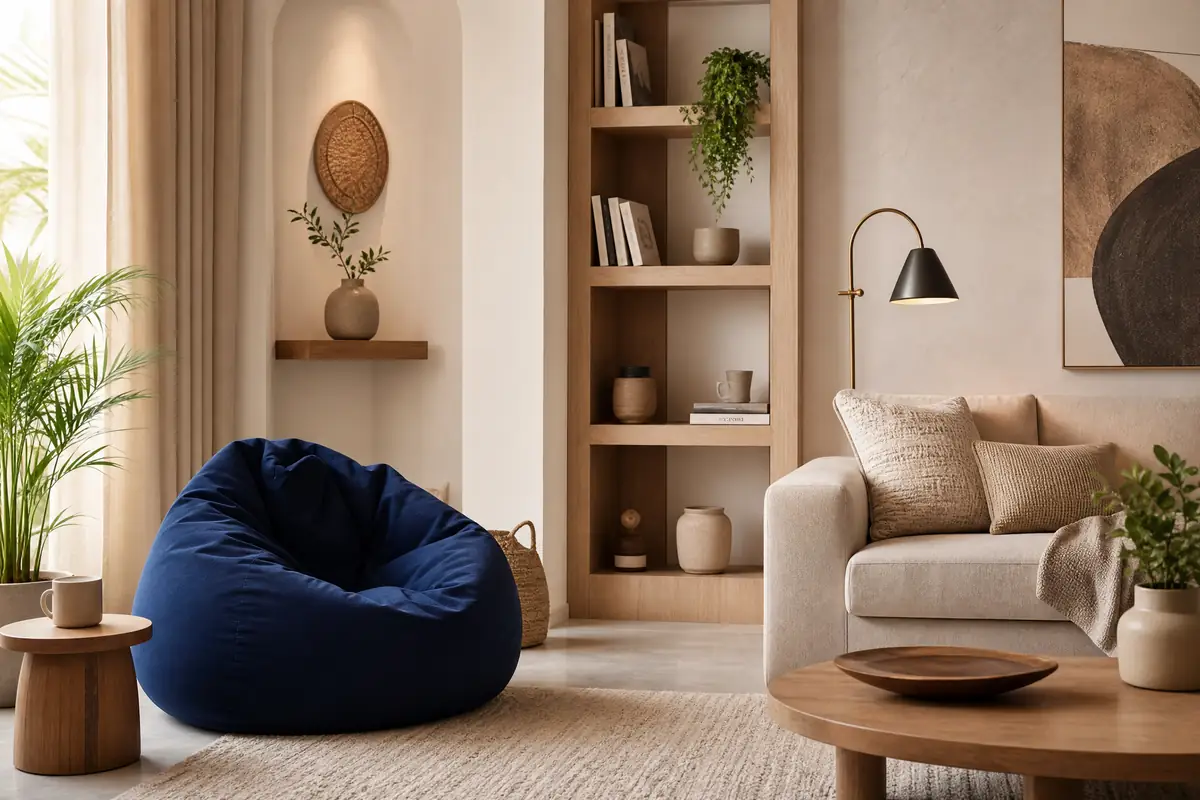
Why does a bean bag work in different rooms?
A bean bag adds relaxed seating without fixing the room layout. Move it between a reading nook, living room, play area or balcony as the needs of the home change.
A bean bag is more than casual seating. The right size, cover and placement can make it useful in a child’s room, a reading corner, a hotel lounge, a beach or poolside setting, or an outdoor match-viewing area. The key is to match the filling, fabric and storage routine to the intensity of use.
Choose the size for the user and room
Small sizes suit children and compact corners; medium sizes work for one adult; large and XL designs provide a wider lounging surface. Keep a clear passage around the seat and away from doors.
Filling: shredded foam or beads?
Shredded foam provides more supportive comfort for long sessions and can be reshaped. Beads are lighter and more mouldable but may need topping up. For daily use, choose a durable inner liner and quality filling.
Fabric and washable covers
Living rooms need a comfortable fabric that tolerates friction. Busy family spaces benefit from a removable, washable and stain-resistant cover with a strong zip and reinforced seams.
Water-resistant bean bags for terraces and pools
Water-resistant covers suit covered terraces, ventilated balconies and poolside seating, but they are not designed for immersion or continuous rain. Wipe water promptly, dry in shade and store in a dry place during severe weather.
A safer bean bag for children
Place it on a stable floor away from heat and sharp corners. Choose a size that does not block doors or windows, use a washable cover and check seams and zips regularly. Avoid jumping near hard furniture.
Styling and everyday care
Place the seat beside a window, bookcase or side table to create a purposeful corner. Redistribute the filling regularly, treat spills quickly and limit prolonged direct sun.
Bean bags in children’s rooms and play areas
Choose a size that suits the child while leaving a clear movement zone around the seat. A removable, washable cover is practical, but the cover, seams and closures still need regular inspection. Children should not open the cover or access loose filling, and a bean bag should never be treated as a cot or a substitute for supervision.
Place it beside a low bookcase or reading corner, away from open windows, heaters and hard edges. To make the play area feel intentional, coordinate the bean bag with the carpet, wall colours and lighting instead of filling a narrow route with oversized seats.
From hotels to beaches and match-viewing areas
Hotels, villas and holiday rentals can use bean bags in informal waiting areas, guest-room window corners and shared poolside lounges. For hospitality use, prioritise covers that are easy to clean and quick to dry, provide generous circulation space, and move the seats into dry storage when rain or strong wind is expected.
“Water-resistant” does not mean suitable for immersion or continuous rain. Around a pool or at the beach, keep the seat on a stable surface, away from standing water and direct chlorine exposure, then wipe and dry it fully before storage. For an outdoor match-viewing zone, combine different sizes with a low side table and clear routes so comfort does not become a trip hazard.
Choosing a bean bag for daily or commercial use
Start with two questions: how many hours will it be used each day, and how many people will handle it? Long daily sessions call for supportive filling and a cover that tolerates friction. Temporary seating or a photo corner may allow a lighter construction. In hotels and offices, include replaceable covers, cleaning time and spare filling in the total ownership plan.
Inspect seams and closure areas before purchase, confirm washing and drying instructions, and choose a footprint that does not block doors or touch sharp furniture. Do not describe a particular product as fire-resistant or child-safe unless the manufacturer documents that claim for that exact model.
A practical care routine for longer service
Every couple of weeks, inspect the cover, zip and seams and blot small spills instead of scrubbing aggressively. Redistribute the filling after long sessions and never lift the seat by a weak closure. Follow the care label because some covers require cool washing and shade drying.
Before storage, clean and dry the seat completely, then keep it in a dry, ventilated place protected from moisture. Outdoors, a protective cover is an extra layer rather than a replacement for drying and inspection.
Useful links across the Homey Journal
Continue from this bean bag guide to related topics that help you plan the complete space:
- Safer choices for children’s rooms
- Poolside and outdoor seating design
- Beach chalet and coastal interiors
- Hotel guest-room planning
- Rooftop terraces and balconies
- Small-apartment space planning
Frequently asked questions
Can a bean bag be used beside a pool? It can be used in a covered or dry area with prompt drying and suitable storage, but it is not intended for immersion or continuous rain.
How do I choose one for a child’s room? Check the size, stability and manufacturer instructions; choose a strong closed cover and supervise use. Do not allow access to loose filling or use it as a sleeping product.
Which is better, foam or beads? It depends on the feel required. Shredded foam usually offers more sustained support, while beads are lighter and more mouldable and may need topping up.
When should the cover be replaced? Replace it when the zip or seams are damaged, or when normal washing no longer removes odour and stains, using a compatible replacement.
Is it suitable for daily use? Yes, when size and filling match the user. Can it be used outdoors? Yes, in a covered space with proper drying and storage. Does it need maintenance? Regular reshaping and cover care are usually enough.