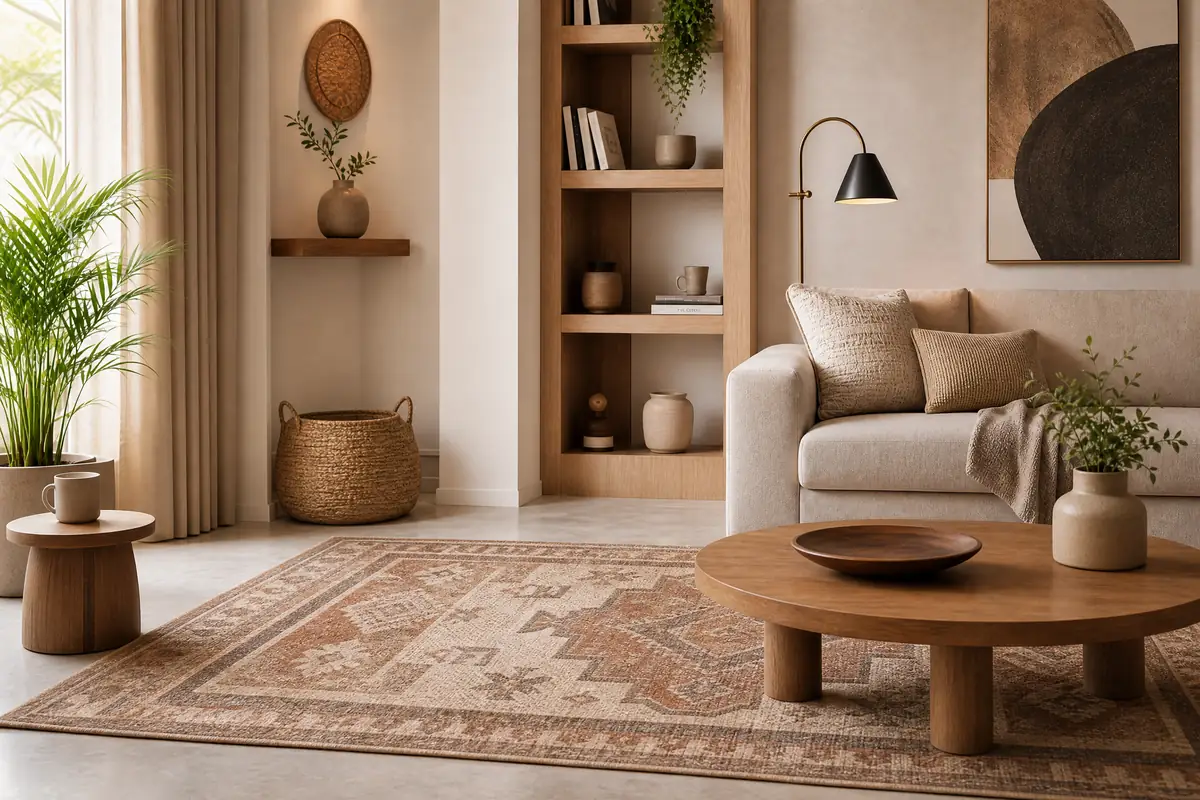
How do you choose the right size?
The front legs of the sofa should sit partly on the rug, with balanced borders around the seating area. A 150×240 cm rug often suits a medium conversation zone, but the room dimensions and circulation come first.
Good carpet selection starts with how a room is used, not with pattern alone. Traffic, daylight, pets and children all affect the best construction. A carpet cover is not a substitute for cleaning; it is a protective layer for storage, renovation or intensive-use periods when it fits correctly and allows ventilation.
Pattern and colour for the room scale
Large patterns suit generous rooms, while small or quiet patterns help compact spaces feel calm. If the walls and furniture already carry colour, use a less busy rug to create balance.
Rugs for different rooms
In a living room, the rug defines the seating zone and connects furniture visually. In a bedroom, it adds warmth beside the bed. Entrances and corridors need durable fibres and patterns that tolerate daily traffic.
What is a carpet cover?
A carpet cover protects the surface from dust and spills during storage or intensive use. Choose the right size, allow ventilation and avoid trapping moisture between the cover and the rug.
Material and everyday durability
High-density polyester is practical and easy to clean, while natural fibres need different care. Follow the maker’s instructions and use an anti-slip underlay on smooth floors.
Cleaning and care
Weekly vacuuming protects the fibres. Blot spills quickly rather than rubbing hard. Clean the cover according to its instructions and let the rug dry fully before covering or storing it.
Choose carpet by traffic and room purpose
In an open-plan living room, let the rug connect the front legs of the furniture and define the seating zone without closing circulation routes. Entrances and corridors need constructions that tolerate friction and disguise everyday soil. Bedrooms allow softer textures when traffic is lighter.
View samples in both daylight and evening light and compare them with flooring, curtains and furniture. Quiet colours can make a room feel more open, while a strong pattern can act as a focal point when the other surfaces are restrained.
Compare fibre, pile and underlay before buying
Low pile is practical for entrances and rooms that need frequent cleaning. Medium pile balances comfort and maintenance, while high pile feels luxurious but holds more dust and furniture impressions. Polyester is often easy to clean; wool feels warm and premium but needs suitable care; other synthetics vary in stain, fading and moisture performance.
Do not compare face weight across unrelated constructions as if it were the only quality measure. Check density, construction and manufacturer instructions, and choose an underlay that prevents movement and wrinkling. On smooth floors, use a compatible anti-slip layer.
Carpet covers: protection without trapping moisture
Use a carpet cover when the rug is clean and dry, such as during moving, renovation or seasonal storage. The cover should fit without crushing the edges and should not trap moisture between the cover and the rug. Maintain ventilation and follow both material-care instructions.
In hotels, holiday rentals and busy homes, a cover can reduce dust exposure during maintenance or furniture changes, but it cannot stop a stain if a spill is left untreated. Inspect the rug after removing the cover before returning it to the floor.
A cleaning routine that protects pattern and texture
Vacuum according to traffic and blot spills from the outside in instead of scrubbing hard. Test any cleaner in a hidden area and do not steam-clean or use strong chemicals unless the manufacturer allows it. Let the rug dry fully before covering or rolling it.
Lift furniture carefully or use suitable protectors, and rotate the rug when the construction allows it to distribute traffic marks. For delicate fibres or large pieces, use a professional cleaner who assesses the fibre and dye before choosing a method.
Carpet for hotels, balconies and outdoor spaces
Hotels and offices benefit from designs that tolerate traffic and allow practical replacement or cleaning. On a covered balcony or outdoor area, do not use an indoor rug unless its material is designed for that setting; moisture, sun and sand change the selection criteria.
Around pools and at the beach, outdoor rugs need drainage, drying and a storage plan. Do not leave them in standing water, keep edges stable and ensure the anti-slip layer suits the floor.
Useful links across the Homey Journal
Continue with related guides for flooring, finishing and hospitality spaces:
- Hotel lobby and reception design
- Hotel, villa and chalet decor
- Poolside outdoor spaces
- Coastal and beach-chalet interiors
- Small-apartment planning
- Comparing interior materials
Frequently asked questions
Can a carpet cover be used for long-term storage? Yes, if the rug is clean and dry, the cover fits correctly and ventilation is maintained. Inspect it periodically rather than trapping moisture.
How do I choose carpet for a busy room? Start with traffic level, then choose a construction and pile that can be cleaned practically, plus an underlay suitable for the floor.
Can one cleaner be used on every rug? No. Care varies by fibre, dye and manufacturer instructions. Test a product in a hidden area first.
What does an underlay do? It can improve grip, comfort, acoustics and floor protection, but it must match the rug and surface.
Does a printed rug suit a small room? Yes, when its scale is proportionate. Is an underlay useful? It improves grip and protects the floor. Can it be covered for a long period? Yes, if clean, dry and ventilated.